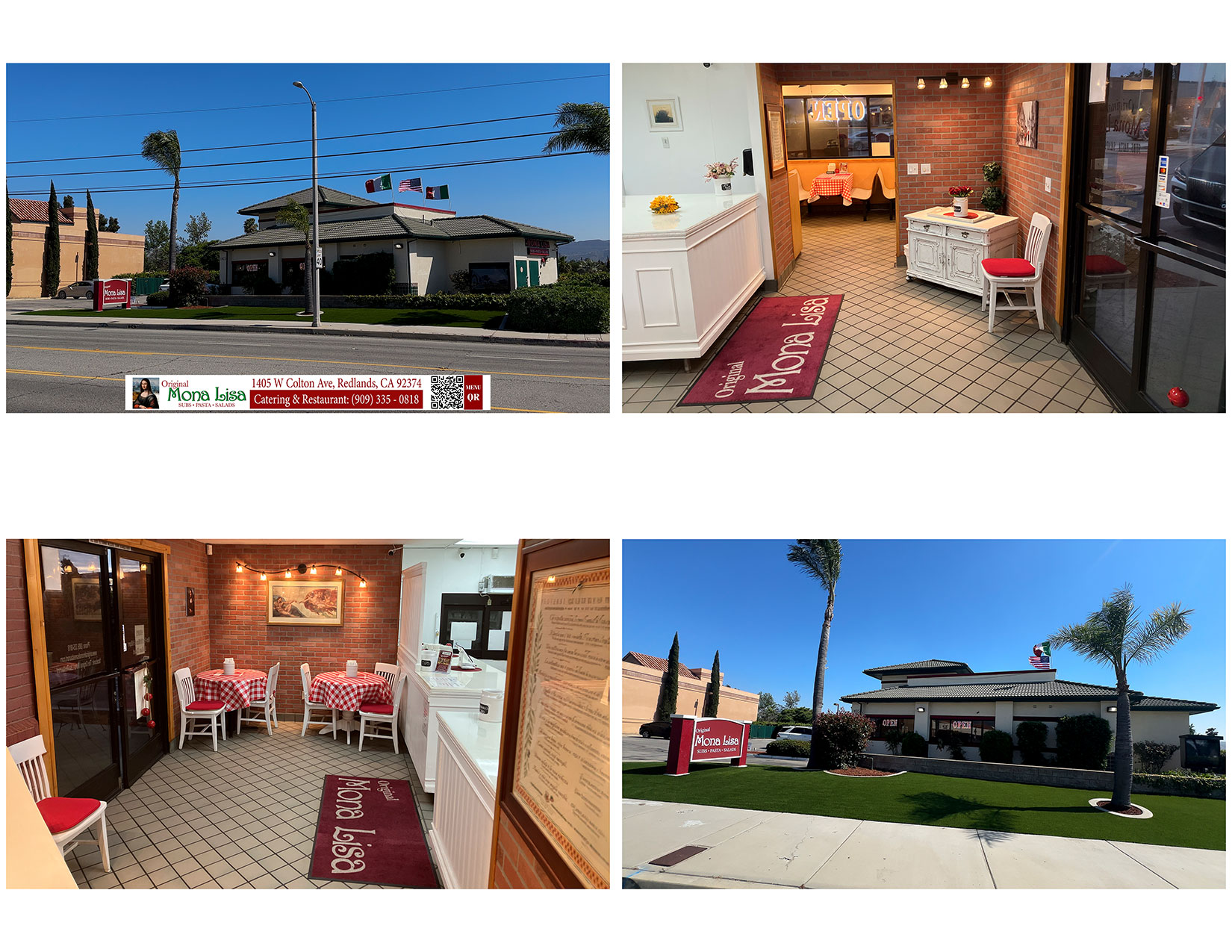
Long before we were slicing lasagna out of this little wedge where Colton Avenue folds into Redlands Boulevard, it held a windowless pizza parlor and bar called the Gay 90s. Cashew pizza started here. So, arguably, did a piece of one of the most famous bars in television history.
Ask anyone who went to the University of Redlands in the late sixties where they spent their money, and a surprising number of them will name a low, windowless box on Colton Avenue close enough to the tracks that the freight trains rattled the glasses.
The oldest story about this lot is that the front of it was once a chicken coop, with a two-story house behind it. Later owners remembered using that back house to make pizza dough. That part is memory, not paperwork — but it’s the kind of memory several people arrive at independently.
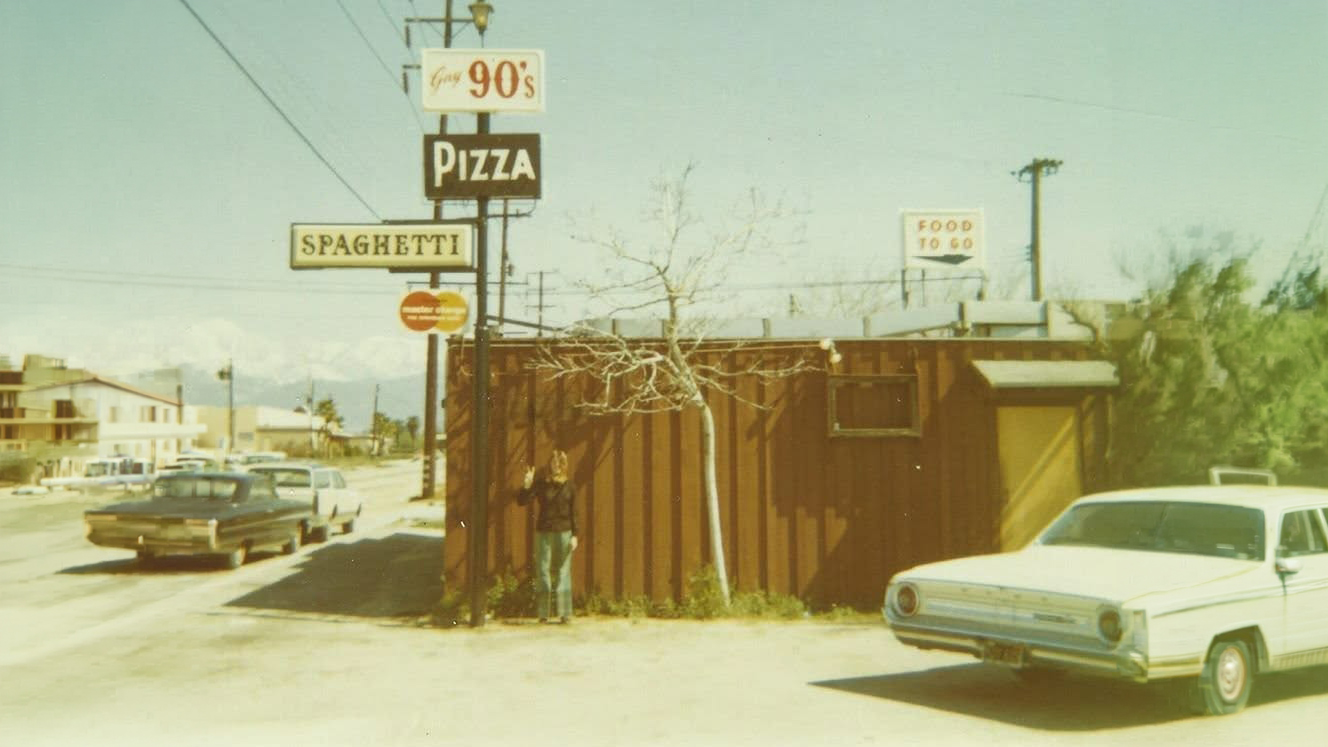
By the time it was the Gay 90s, the name pointed backward to the 1890s: a turn-of-the-century saloon theme, walls layered in posters and old menus, pizza and grinders and salads, and beer by the pitcher at a price that made it the natural default for a college town.
Dave and Lorna Wilson bought it in 1967. Dave had cooked in the Army. He kept the saloon motif, rebuilt the menu, and renamed the place Dirty Dave’s Infamous Gay 90s Pizza Parlor — a man who understood that the sign is part of the food.
Then came the accident that outlived everybody. A customer asked for a bag of cashews to dump on his slice. Dave tried it, liked it, and put it on the menu.
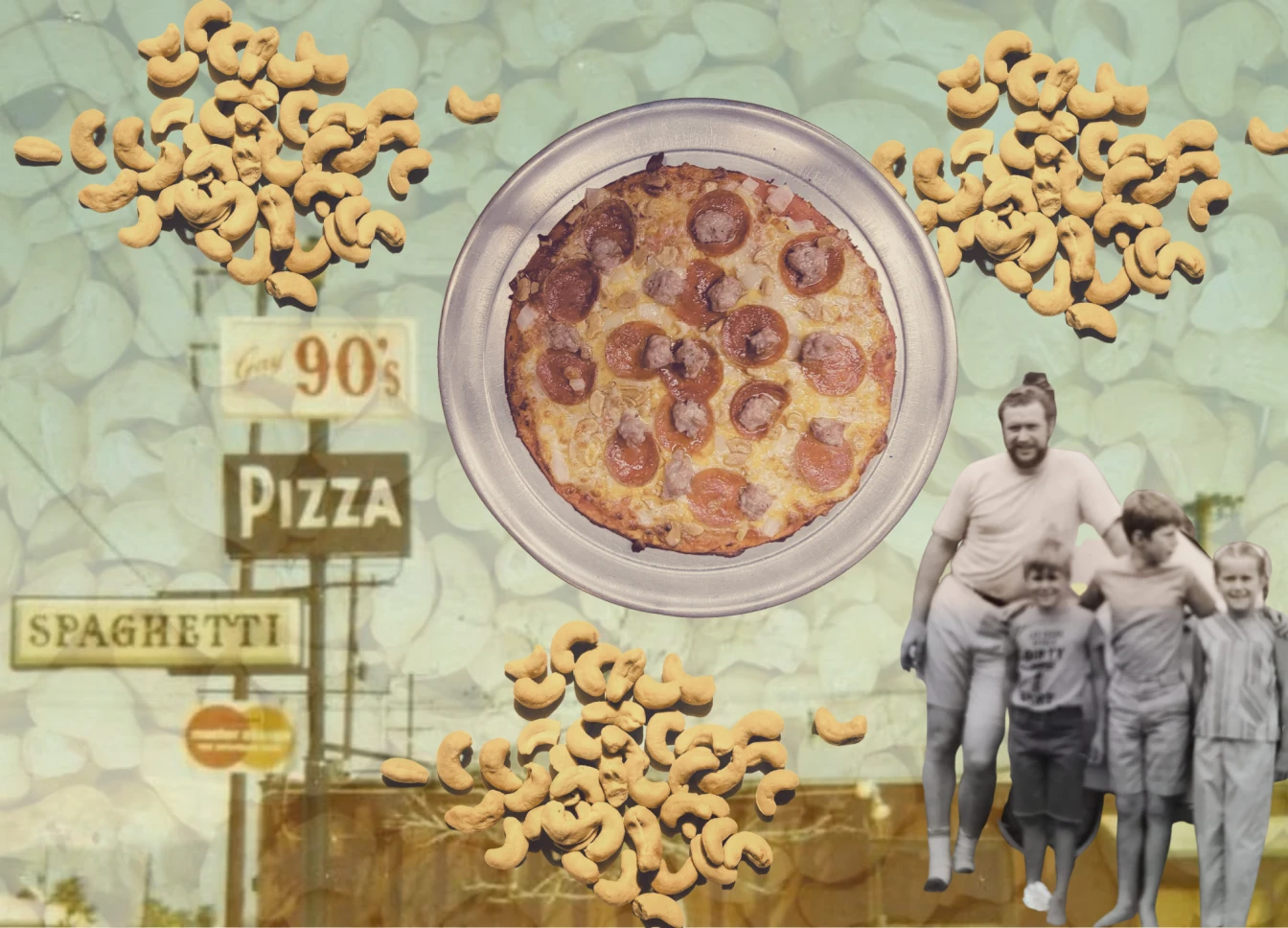
That is, as far as anyone can trace it, the origin of cashew pizza. It went on the board as the Gay 90s Special and never came off. Pizzerias across the region still offer it. Most of them have no idea why.
In the summer of 1971 the Wilsons’ house in Redlands burned down. They sold the restaurant, moved north, and opened Dirty Dave’s Pizza in Olympia, Washington, in March 1972 — cashews and all. Dave died in 2013. His family still runs it.
The regulars who ended up on television
Les and Glen Charles didn’t just drink at the Gay 90s. He tended bar there while he was a student at the University of Redlands. His brother Glen went to school here too.
The show it helped inspireCheers (1982–1993)Created by Glen Charles, Les Charles and James Burrows. Eleven seasons of a bar where everybody knows your name.
View on IMDb
The two of them went on to create Cheers with James Burrows — eleven seasons, a shelf of Emmys, and a permanent place in the American idea of what a neighborhood bar feels like. Les has said that the Gay 90s worked its way into the show: the room, the rhythm, and above all a particular species of customer who is never leaving.
Old San Bernardino newspaper coverage points to a Gay 90s regular named Norman Baffrey — a large man in a coat and tie who held down the end of the bar and held court from it. Les separately remembered a guy who stayed all night, each beer solemnly announced as his last.
We’ll say what’s fair and stop there: the characters became composites, and George Wendt made Norm his own. But the raw material came out of rooms like this one, and one of those rooms was on this lot.
There’s a coda worth keeping. In the mid-nineties, after speaking at a University of Redlands commencement, the Charles brothers reportedly came back to the Gay 90s — in a limousine.
Steve McQueen and Ali MacGraw were said to ride up together, adding to the restaurant’s reputation as an off-the-beaten-path celebrity hangout. More recently, visitors have included Connie Zastoupil, mother of filmmaker Quentin Tarantino, and Diana Martinez, a San Fernando newspaper writer.
The Original Mona Lisa has also continued its connection to Southern California film and media through its work with Los Angeles filmmaker Ron Cobert, who has produced and directed commercial advertising for the restaurant.
Everything we’ve got, in order
Some of this comes from newspaper and property records. Some comes from people who were there. We’ve labeled which is which, because a history that pretends to be certain isn’t worth much.
Before 1958 — as told. A chicken operation out front, a two-story house behind it. The house is later remembered as the spot where the pizza dough got made.
Late 1950s — as told. The Gay 90s opens on this lot. Accounts describe an unglamorous, windowless box turning out pizza, grinders, salads and beer.
1967 — documented. Dave and Lorna Wilson buy the restaurant. Dave renames it Dirty Dave’s Infamous Gay 90s Pizza Parlor, revises the menu, keeps the 1890s saloon look.
Late 1960s — documented. The cashew accident. A customer’s request becomes the Gay 90s Special, and eventually a regional habit.
Late 1960s — documented. Les Charles, a University of Redlands student, works behind the bar. His brother Glen is also at the university.
Summer 1971 — documented. The Wilsons’ Redlands home burns. They sell the Gay 90s and head north, opening Dirty Dave’s Pizza in Olympia, Washington, in March 1972.
1973 — as told. Gus and Claudia De Roos take over. Homemade dough, house dressings, cheap pitchers — and homecoming nights measured in hundreds of pizzas.
Early 1990s — as told. The Gay 90s leaves Colton Avenue for 214 Orange Street downtown, later runs about two years in Mentone, and then goes quiet.
Mid 1990s — as told. The Charles brothers return to the Gay 90s by limousine after a University of Redlands commencement address.
1993 to 2001 — open question. The original building comes down. One published account says 2001. Another says it was already gone before Cheers ended in 1993. Both can’t be right, and we’d like to settle it.
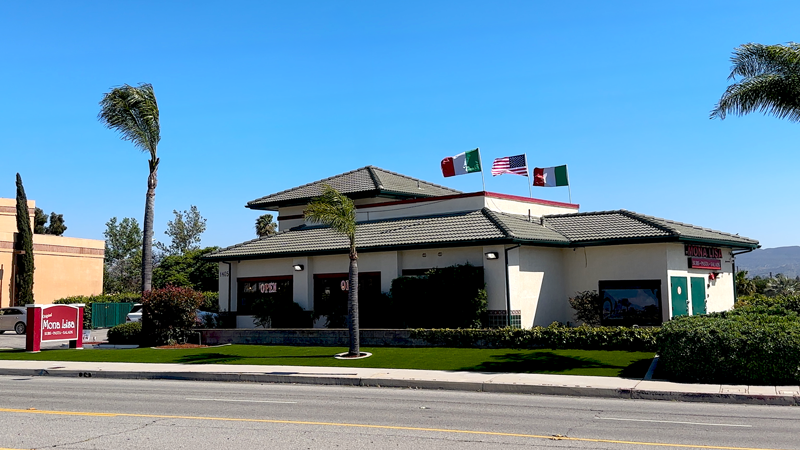
1999 — documented. The Original Mona Lisa moves onto the triangle, after years at Orange Street and Pearl Avenue. Commercial records date the current structure to this year.
2024 — documented. The restaurant closes and reopens — same corner, same pans, same family operation.
Today. Pasta, subs and a drive-thru on one of the most quietly consequential wedges of land in San Bernardino County.
Somebody out there has a photograph of this place in 1969
We’re building the real record of 1405 W. Colton: parcel history, building permits, aerial photos, and whatever’s sitting in a shoebox in your garage. If you ate here, worked here, or married someone you met here, we want to hear it.
Photos. Matchbooks. Old menus. T-shirts. Stories. Names of regulars.
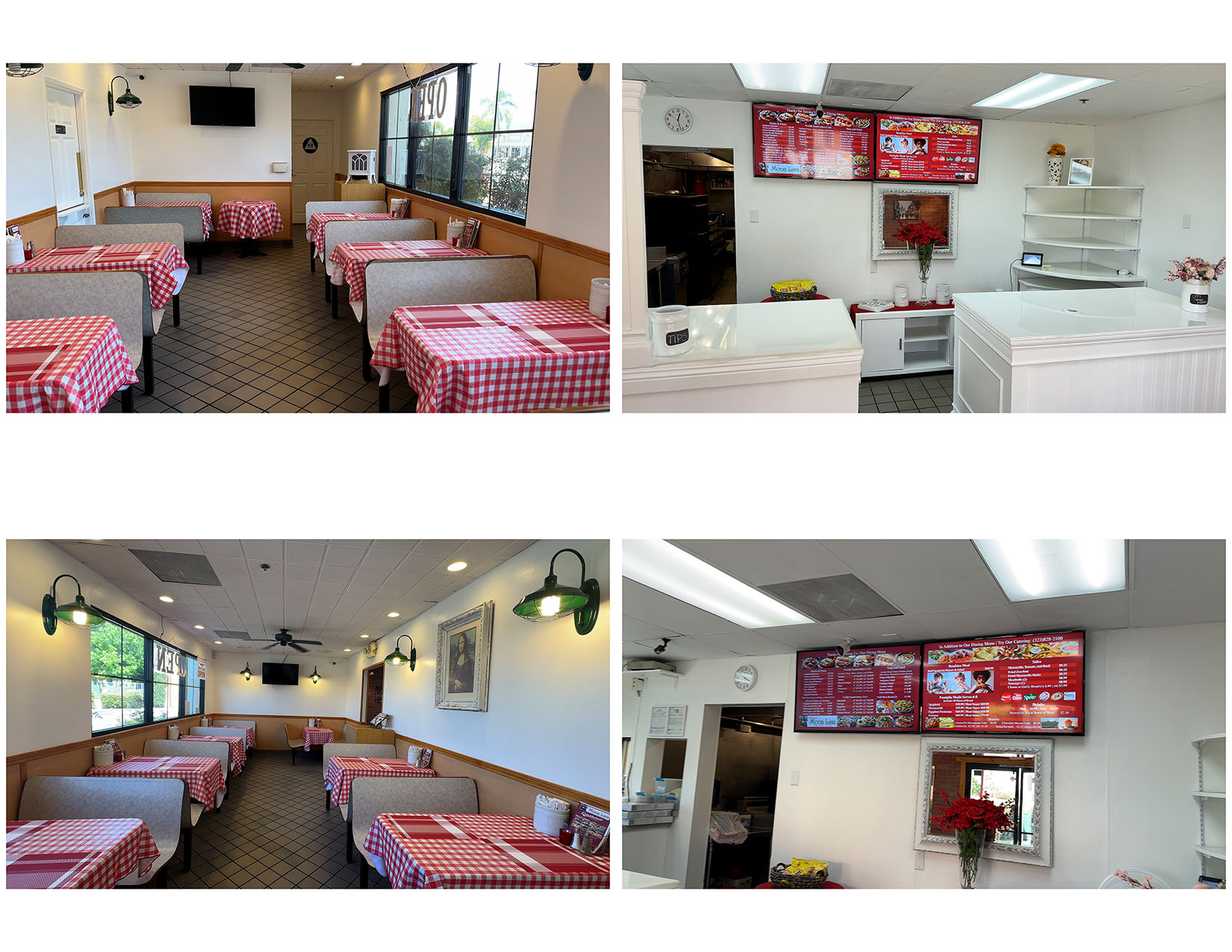
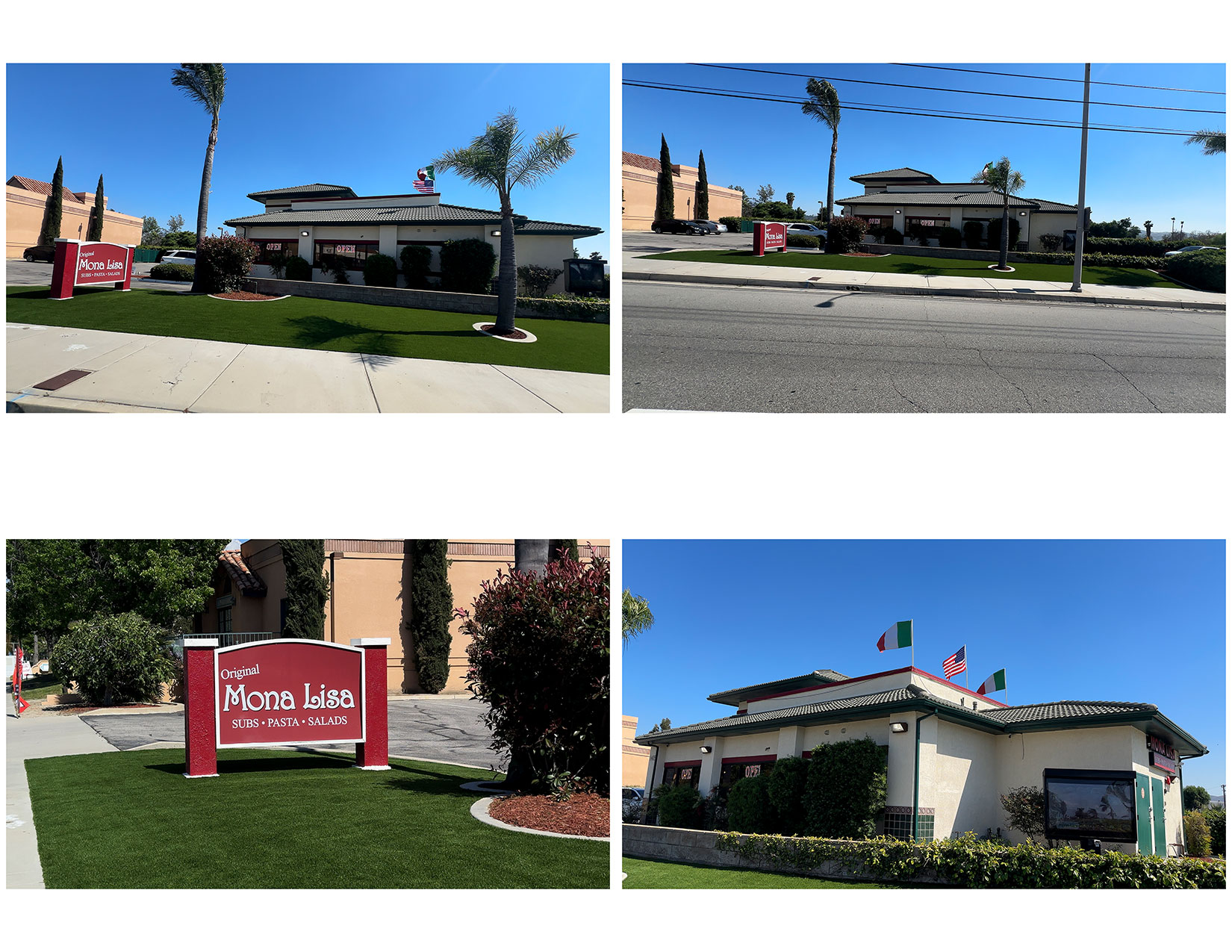
Today’s Original Mona Lisa